Why the lightweight hall is the better alternative to a container kitchen.
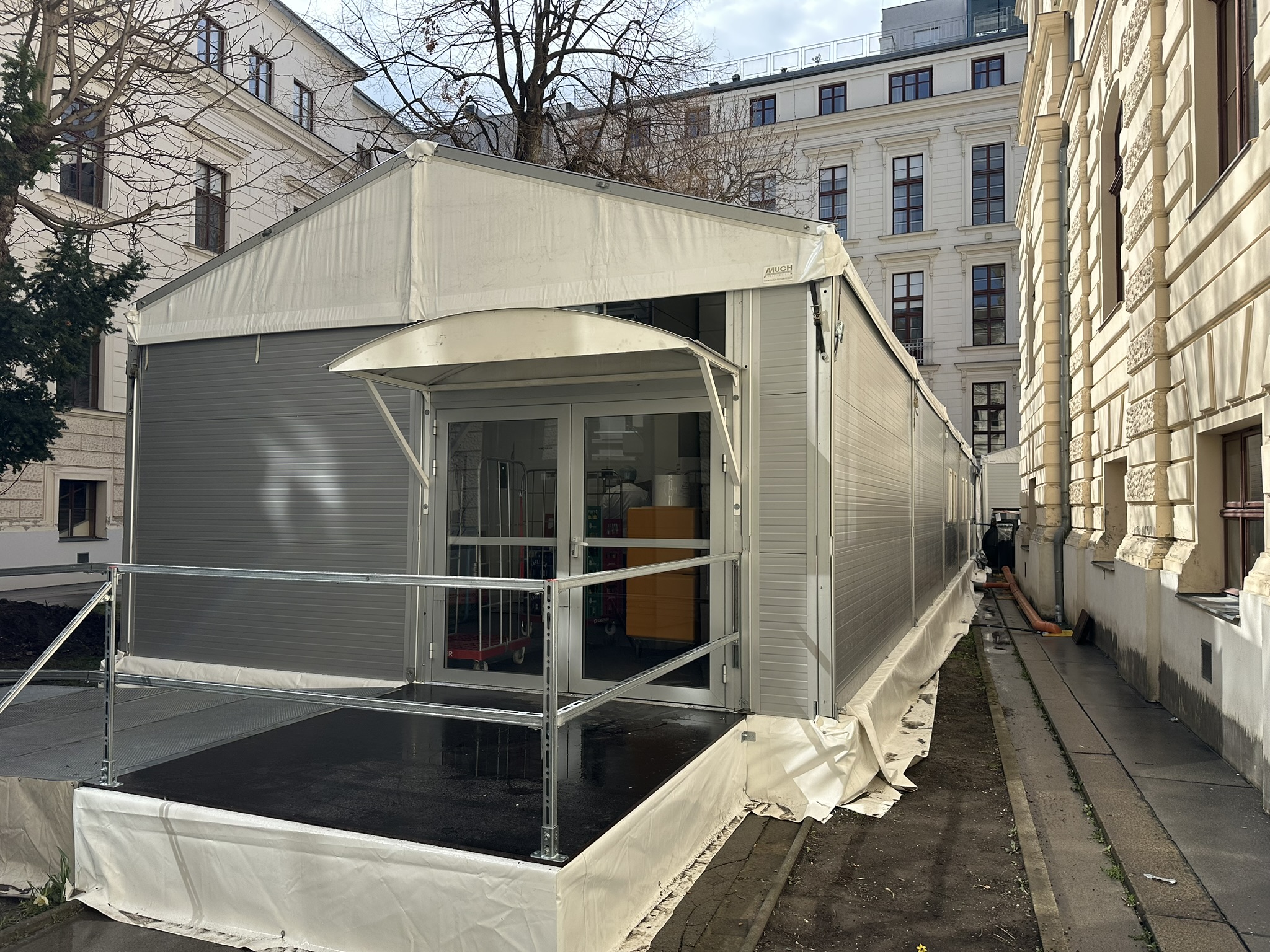
Temporary kitchens have to function under special conditions: limited time frames, high demands on ergonomics, hygiene and operational safety – and often while the kitchen is still in operation. Many projects have shown that lightweight buildings are much better suited to these requirements than a container-only solution. But why is that?
More space, more ergonomics, more efficiency
A lightweight hall offers flexible space allocation. Stations, walkways, storage areas, sinks and cooking areas can be planned to suit the workflow perfectly – without the narrow grids and restricted working widths of a container kitchen.
The result: ergonomic working conditions and clear processes.

Optimal climate and better technical conditions
The greater ceiling height of the lightweight hall facilitates the planning of supply and exhaust air, air conditioning and dehumidification. Whereas containers tend to quickly develop high air flows, heat build-up or an unpleasant climate, a lightweight hall can be precisely equipped to create a working environment that functions effectively for months on end.
Flexible planning – independent of rigid module grids
While containers have fixed dimensions and spatial structures, lightweight halls are free-form structures.
This means:
• Any arrangement of workstations
• No bottlenecks
• Optimised material flows
• Solutions tailored precisely to the location
This flexibility makes a big difference, especially in complex renovations or cramped courtyards.

Safe implementation of hygiene and workplace guidelines
Free planning makes it possible to design hygienic partitions, storage areas, airlocks and traffic routes in such a way that all requirements are reliably met.
Compromises often have to be made in containers – but not in lightweight construction halls.
Easier approval and lower technical risks
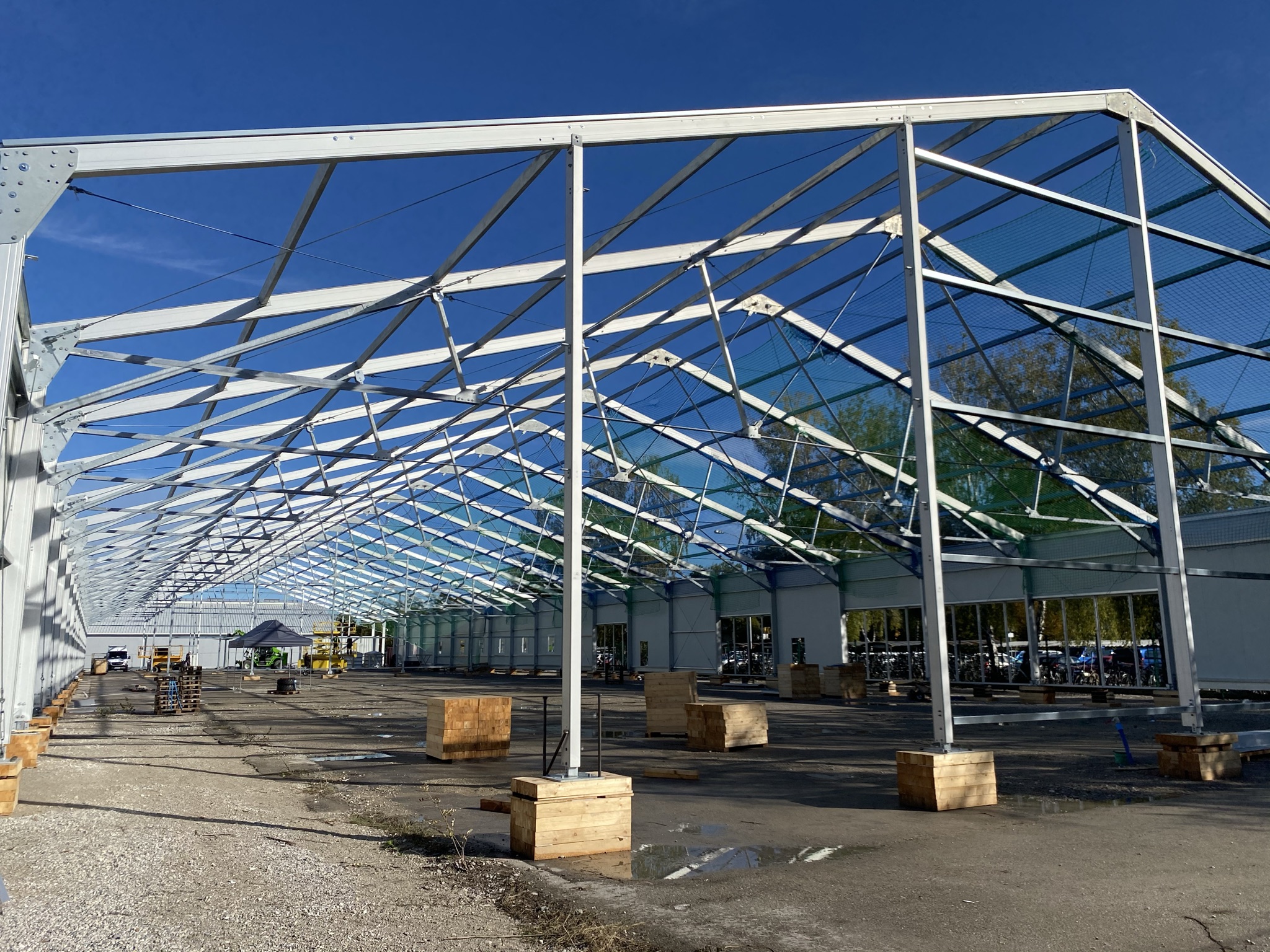
Modern lightweight halls meet structural requirements much better than one might expect:
they can be planned with fire safety in mind, offer high load-bearing capacity and are easy to integrate into existing systems such as fire alarm systems or media connections.
Assembly is usually less complicated, as there is no need for large insertion parts and crane movements, which are often required with containers.
When containers are still useful
Container modules are a flexible addition when additional capacity is required at short notice or temporary production and supply areas need to be created. They can be set up quickly, expanded modularly and put into operation immediately if necessary – ideal for manageable periods of time, clearly defined functions or as a temporary extension of existing kitchen structures.
Conclusion: More quality, more safety, more planning freedom
Lightweight halls enable the planning of an interim kitchen that is ergonomic, efficient and technically robust – without restrictions for the kitchen team. In most cases, they are therefore the better alternative to container kitchens – and consistently meet the requirements of the Telia standard.